Image

Instituto de Productos Naturales y Agrobiología
Atmospheric deposition of desert dust and other aerosols influence on the open ocean ecosystem and climate. These aerosols provide iron, phosphorus and bio-essential trace elements, which affect the composition and growth of phytoplankton, generating new organic matter that is distributed across the food web. Although this process has an impact on upper trophic levels and fisheries, direct evidence is lacking. Skipjack tropical tuna (Katsuwonus pelamis) is the most important commercial tuna in the Atlantic, main stocks occur in the tropical and subtropical North-East Atlantic. We found that the migrations and fisheries of skipjack are connected to Saharan dust variability. From boreal winter to summer, skipjack performs an Atlantic-Saharan migration, from equatorial (0-5°N) to subtropical waters of the North-East Atlantic (regularly reaching open waters off Mauritania ∼20°N and the Canary Islands ∼28°N), tracking the seasonal shift of dust deposition in the North-East Atlantic. The observed long-term associations of skipjack catch with the seasonal cycles, anomalies and meridional variability of dust over the North-East Atlantic, shows that along the year skipjack catches mainly occur in waters affected by massive dust deposition linked (i) to dust wet deposition in tropical waters and (ii) to dust dry deposition in the Saharan desert-dust outflow. Atmospheric deposition of dust in the open ocean and in upwelling waters contributes to support zooplankton-rich areas, which are optimal for feeding small fish, molluscs and cephalopods, and suitable for feeding large predators, as skipjacks, where they are caught in abundance. The most important fishing area of Atlantic skipjack tuna is located off North West Africa in the waters affected by massive dust deposition that underly the dusty airstream from the North Africa desert. The role of dust as fertilizing and supporter of phytoplankton and zooplankton rich areas also has implications for other species of fishing interest, including other tropical tuna (e.g. bigeye and yellowfin), which are often exploited simultaneously with skipjack by the same fisheries. As far as we know this is the first study showing the connexions between atmospheric inputs of desert dust to ocean and the migrations and fisheries of marine species. These results have important implications on our understanding on the influence of atmospheric dust on marine ecosystems and on the management of fisheries.
Rodríguez, Sergio; Riera, Rodrigo; Fonteneau, Alain; Alonso-Pérez, Silvia; López-Darias, Jessica.
Invasive alien species have widespread impacts on native biodiversity and ecosystem services. Since the number of introductions worldwide is continuously rising, it is essential to prevent the entry, establishment and spread of new alien species through a systematic examination of future potential threats. Applying a three-step horizon scanning consensus method, we evaluated non-established alien species that could potentially arrive, establish and cause major ecological impact in Spain within the next 10 years. Overall, we identified 47 species with a very high risk (e.g. Oreochromis niloticus, Popillia japonica, Hemidactylus frenatus, Crassula helmsii or Halophila stipulacea), 61 with high risk, 93 with moderate risk, and 732 species with low risk. Many of the species categorized as very high or high risk to Spanish biodiversity are either already present in Europe and neighbouring countries or have a long invasive history elsewhere. This study provides an updated list of potential invasive alien species useful for prioritizing efforts and resources against their introduction. Compared to previous horizon scanning exercises in Spain, the current study screens potential invaders from a wider range of terrestrial, freshwater, and marine organisms, and can serve as a basis for more comprehensive risk analyses to improve management and increase the efficiency of the early warning and rapid response framework for invasive alien species. We also stress the usefulness of measuring agreement and consistency as two different properties of the reliability of expert scores, in order to more easily elaborate consensus ranked lists of potential invasive alien species.
Cano-Barbacil, Carlos; Carrete, Martina; Castro-Díez, Pilar; Delibes-Mateos, Miguel; Jaques, Josep A.; López-Darias, Marta; Nogales, Manuel; Pino, Joan; Ros, Macarena; Traveset, Anna; Turon, Xavier; Vilà, Montserrat; Altamirano, María; Álvarez, Inés; Arias, Andrés; Boix, Dani; Cabido, Carlos; Cacabelos, Eva; Cobo, Fernando; Cruz, Joaquín; Cuesta, José A.; Dáder, Beatriz; Estal, Pedro del; Gallardo, Belinda; Gómez Laporta, Miguel; González-Moreno, Pablo; Carlos Hernández, José; Jiménez-Alfaro, Borja; Lázaro Lobo, Adrián; Leza, Mar; Montserrat, Marta; Oliva-Paterna, Francisco J.; Piñeiro, Laura; Ponce, Carlos; Pons, Pere; Rotchés-Ribalta, Roser; Roura-Pascual, Núria; Sánchez, Marta; Trillo, Alejandro; Viñuela, Elisa; García-Berthou, Emili.
The thomisid spider Synema globosum (Fabricius, 1775) is widely distributed in the Palaearctic realm and is particularly common in southern parts of zones with a temperate climate. Seven subspecies have been described; the widely distributed nominotypical subspecies, S. g. globosum and six with much more restricted ranges. As of now, just two subspecies are still recognised as valid while the others have been synonymized with the nominate subspecies. This study now revalidates S. g. canariense Dahl, 1907 (subsp. reval.) based on findings from molecular and comparative morphological analysis. We also argue that the synonymization of the subspecies S. g. daghestanicum Utochkin, 1960 and the species S. japonicum Karsch, 1879 with S. globosum in Ono (1988) is formally correct, but needs further investigation with modern methods.
Lissner, Jørgen; Suárez, Daniel.
[Aims]: The main objective of this study is to determine whether exposure to Saharan dust causes airway inflammation and oxidative stress in patients with stable chronic heart failure (HF) and a left ventricular ejection fraction of less than 40%. [Methods]: A longitudinal study design is used, involving the inclusion of 40 patients with stable chronic HF and a left ventricular ejection fraction of less than 40%. Four sputum samplings will be taken from each patient, with one sampling taken each week over four consecutive weeks. The sputum samples will be used to analyze the degree of inflammation and oxidative stress. Air quality monitoring stations will be used to analyze the particulate matter (PM) exposure of each patient. The intrusion of desert dust will be identified using meteorological models. There will be 160 scheduled samplings in 40 patients with chronic HF. Mixed regression models will be used to assess the influence of the concentrations of PM (from the episodes of desert dust) upon the airway inflammation and oxidative stress markers. [Conclusion]: The results of this study will test the hypothesis that exposure to high concentrations of Saharan dust affects the normal function of the respiratory epithelium due to the imbalance between the production of free radicals and antioxidant enzymes, thus causing increased pulmonary inflammation and oxidative stress in patients with HF that in turn may facilitate decompensations of their background disease condition.
Domínguez-Rodríguez, Alberto; Avanzas, Pablo; Báez-Ferrer, Néstor; Abreu-González, Pedro; Rodríguez, Sergio; Matos-Castro, Sebastian; Hernández-Vaquero, Daniel.
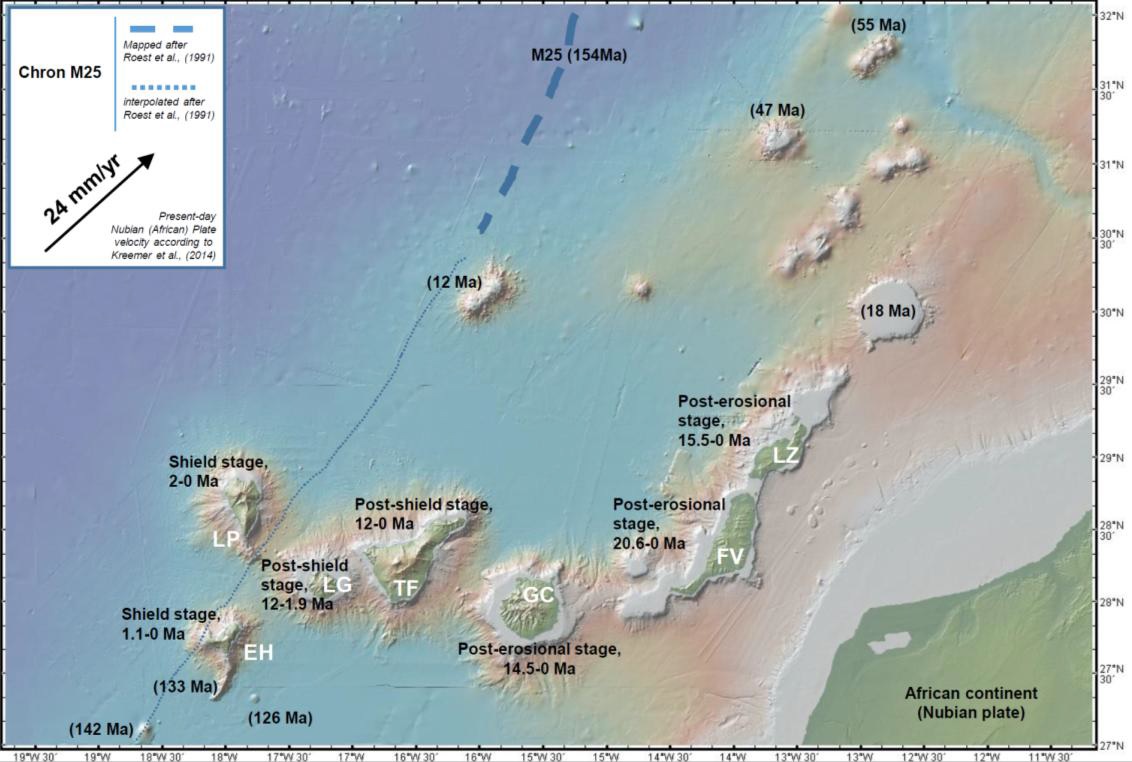
El Hierro Island, the youngest of the Canary Islands, and its latest eruption in 2011–2012 have been a playground of fruitful decade-long studies. In this book, we summarize and provide future venues of action to solve outstanding questions. The topics cover geological studies of Holocene volcanism so it informs past, present and future activity. Its active magmatic system from a petrological and geophysical lens. How monitoring of volcanic activity can be optimized and how to read the data streams in a meaningful way. The marine environmental effects of a submarine eruption are covered in detail, as well as how the society could be properly engage to reduce the risks associated to it, and appreciate and benefit from it. So, in each chapter the reader should find inspiration and future challenges waiting to be solved. Remaining puzzles pieces about how volcanism works and how it affects its environment. An effort to provide food for thoughts of future Canary Islands volcanological research, and in particular El Hierro.
González, Pablo J.
Aim: Understanding how grain size affects our ability to characterize species responses to ongoing climate change is of crucial importance in the context of an increasing awareness for the substantial difference that exists between coarse spatial resolution macroclimatic data sets and the microclimate actually experienced by organisms. Climate change impacts on biodiversity are expected to peak in mountain areas, wherein the differences between macro and microclimates are precisely the largest. Based on a newly generated fine-scale environmental data for the Canary Islands, we assessed whether data at 100 m resolution is able to provide more accurate predictions than available data at 1 km resolution. We also analysed how future climate suitability predictions of island endemic bryophytes differ depending on the grain size of grids.
Location: Canary Islands.
Time period: Present (1979–2013) and late-century (2071–2100).
Taxa: Bryophytes.
Methods: We compared the accuracy and spatial predictions using ensemble of small models for 14 Macaronesian endemic bryophyte species. We used two climate data sets: CHELSA v1.2 (~1 km) and CanaryClim v1.0 (100 m), a downscaled version of the latter utilizing data from local weather stations. CanaryClim also encompasses future climate data from five individual model intercomparison projects for three warming shared socio-economic pathways.
Results: Species distribution models generated from CHELSA and CanaryClim exhibited a similar accuracy, but CanaryClim predicted buffered warming trends in mid-elevation ridges. CanaryClim consistently returned higher proportions of newly suitable pixels (8%–28%) than CHELSA models (0%–3%. Consequently, the proportion of species predicted to occupy pixels of uncertain suitability was higher with CHELSA (3–8 species) than with CanaryClim (0–2 species.
Main conclusions: The resolution of climate data impacted the predictions rather than the performance of species distribution models. Our results highlight the crucial role that fine-resolution climate data sets can play in predicting the potential distribution of both microrefugia and new suitable range under warming climate.
Patiño, Jairo; Collart, Flavien; Vanderpoorten, Alain; Martin-Esquivel, José Luis; Naranjo-Cigala, Agustín; Mirolo, Sébastien; Karger, Dirk N.
The physical factors governing the catalysis in Lewis acid-promoted carbonyl-ene reactions have been explored in detail quantum chemically. It is found that the binding of a Lewis acid to the carbonyl group directly involved in the transformation greatly accelerates the reaction by decreasing the corresponding activation barrier up to 25 kcal/mol. The Lewis acid makes the process much more asynchronous and the corresponding transition state less in-plane aromatic. The remarkable acceleration induced by the catalyst is ascribed, by means of the activation strain model and the energy decomposition analysis methods, mainly to a significant reduction of the Pauli repulsion between the key occupied π-molecular orbitals of the reactants and not to the widely accepted stabilization of the LUMO of the enophile.
Rodríguez, Humberto A.; Cruz, Daniel A.; Padrón, Juan I.; Fernández, Israel.
Ecological interactions are one of the main forces that sustain Earth’s biodiversity. A major challenge for studies of ecology and evolution is to determine how these interactions affect the fitness of species when we expand from studying isolated, pairwise interactions to include networks of interacting species1,2,3,4. In networks, chains of effects caused by a range of species have an indirect effect on other species they do not interact with directly, potentially affecting the fitness outcomes of a variety of ecological interactions (such as mutualism)5,6,7. Here we apply analytical techniques and numerical simulations to 186 empirical mutualistic networks and show how both direct and indirect effects alter the fitness of species coevolving in these networks. Although the fitness of species usually increased with the number of mutualistic partners, most of the fitness variation across species was driven by indirect effects. We found that these indirect effects prevent coevolving species from adapting to their mutualistic partners and to other sources of selection pressure in the environment, thereby decreasing their fitness. Such decreases are distributed in a predictable way within networks: peripheral species receive more indirect effects and experience higher reductions in fitness than central species. This topological effect was also evident when we analysed an empirical study of an invasion of pollination networks by honeybees. As honeybees became integrated as a central species within networks, they increased the contribution of indirect effects on several other species, reducing their fitness. Our study shows how and why indirect effects can govern the adaptive landscape of species-rich mutualistic assemblages.
Cosmo, Leandro G.; Assis, Ana Paula A.; de Aguiar, Marcus A. M.; Pires, Mathias M.; Valido, Alfredo; Jordano, Pedro; Thompson, John N.; Bascompte, Jordi; Guimarães Jr., Paulo R.
Naegleria fowleri is the causative agent of a central nervous system affecting disease called primary amoebic meningoencephalitis. It is a fulminant disease with a rapid progression that affects mainly children and young adults who report previous water exposure. Current treatment options are not totally effective and involve several side effects. In this work, six meroterpenoids isolated from the brown algae Gongolaria abies-marina were evaluated against N. fowleri. Gongolarone B (1), 6Z-1′-methoxyamentadione (2), and 1′-methoxyamentadione (3) were the most active molecules against N. fowleri with IC50 values between 13.27 ± 0.96 µM and 21.92 ± 1.60 µM. However, cystomexicone B (6) was the molecule with the highest selectivity index (>8.5). Moreover, all these compounds induced different cellular events compatible with the apoptosis-like PCD process, such as chromatin condensation, damages at the mitochondrial level, cell membrane disruption, and production of reactive oxygen species (ROS). Therefore, G. abies-marina could be considered as a promising source of active molecules to treat the N. fowleri infections.
Arberas-Jiménez, Íñigo; Rodríguez-Expósito, Rubén L.; San Nicolás-Hernández, Desirée; Chao-Pellicer, Javier; Sifaoui, Inés; Díaz-Marrero, Ana R.; Fernández, José J.; Piñero, José E.; Lorenzo-Morales, Jacob.
A library of structurally related coumarins was generated through synthesis reactions and chemical modification reactions to obtain derivatives with antiproliferative activity both in vivo and in vitro. Out of a total of 35 structurally related coumarin derivatives, seven of them showed inhibitory activity in in vitro tests against Taq DNA polymerase with IC50 values lower than 250 μM. The derivatives 4-(chloromethyl)-5,7-dihydroxy-2H-chromen-2-one (2d) and 4-((acetylthio)methyl)-2-oxo-2H-chromen-7-yl acetate (3c) showed the most promising anti-polymerase activity with IC50 values of 20.7 ± 2.10 and 48.25 ± 1.20 μM, respectively. Assays with tumor cell lines (HEK 293 and HCT-116) were carried out, and the derivative 4-(chloromethyl)-7,8-dihydroxy-2H-chromen-2-one (2c) was the most promising, with an IC50 value of 8.47 μM and a selectivity index of 1.87. In addition, the derivatives were evaluated against Saccharomyces cerevisiae strains that report about common modes of actions, including DNA damage, that are expected for agents that cause replicative stress. The coumarin derivatives 7-(2-(oxiran-2-yl)ethoxy)-2H-chromen-2-one (5b) and 7-(3-(oxiran-2-yl)propoxy)-2H-chromen-2-one (5c) caused DNA damage in S. cerevisiae. The O-alkenylepoxy group stands out as that with the most important functionality within this family of 35 derivatives, presenting a very good profile as an antiproliferative scaffold. Finally, the in vitro antiretroviral capacity was tested through RT-PCR assays. Derivative 5c showed inhibitory activity below 150 μM with an IC50 value of 134.22 ± 2.37 μM, highlighting the O-butylepoxy group as the functionalization responsible for the activity.
Bruna-Haupt, Ezequiel F.; Perretti, Marcelle D.; Garro, Hugo A.; Carrillo Fumero, Romen; Machín, Félix; Lorenzo-Castrillejo, Isabel; Gutiérrez, Lucas; Vega-Hissi, Esteban G.; Mamberto, Macarena; Menacho-Marquez, Mauricio; Fernández, Claudio O.; García, Celina; Pungitore, Carlos R.